+251.911.231985
info@heimattoursethiopia.com

- Destinations
- Travel Style
- Ethiopia
- Heimat Exports
- About Us

Tradition claims that, shortly after his birth, he was surrounded by a swarm of bees, seeing this, his mother, seized by the spirit of prophecy, cried out, “The bees know that this child will become king!” He was accordingly given the name Lalibela, literally, “The Bees Recognizes his Sovereignty”. Lalibela first established a capital at a place called Roha, where the red volcanic rock of the area lent itself to the excavation of rock-hewn churches. Lalibela was the capital of the Zagwe Dynasty, which ruled over Ethiopia from the 10th century to the mid 13th century.
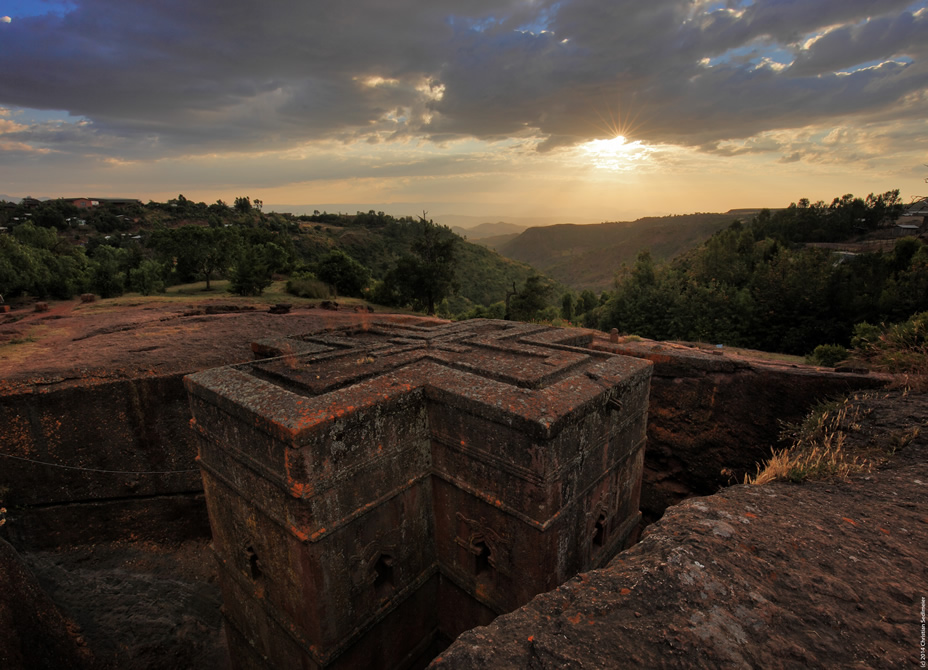
In 12th century king Lalibela established a remarkable group of eleven churches. He made them, it is believed, not only as a sign of his devotion to the Almighty, but also to make them, and hence the capital, a major place of pilgrimage. “When he began to excavate the churches, angels came to help him in each of the operations; the angels who were with the king made the measurements, indicating the required dimension for all the churches, large and small”. The lalibela churches are big- several are in excess of 10m high- and, because they are carved below ground level, they are ringed by trenches and courtyards, the sides of which are cut into with stone graves and hermit cell, and connected to each other by a tangled maze of tunnels and passages.